

I’ve read a lot of health advice over the years.
Some of it sounds great.
Some of it feels extreme.
And most of it… doesn’t last.
You try something new for a few days.
Then real life takes over — work, mood, stress, laziness.
And the habit disappears.
That’s why I stopped chasing perfect routines.
Instead, I started focusing on science-backed health habits that actually work in real life.
Not extreme. Not complicated. Just doable.
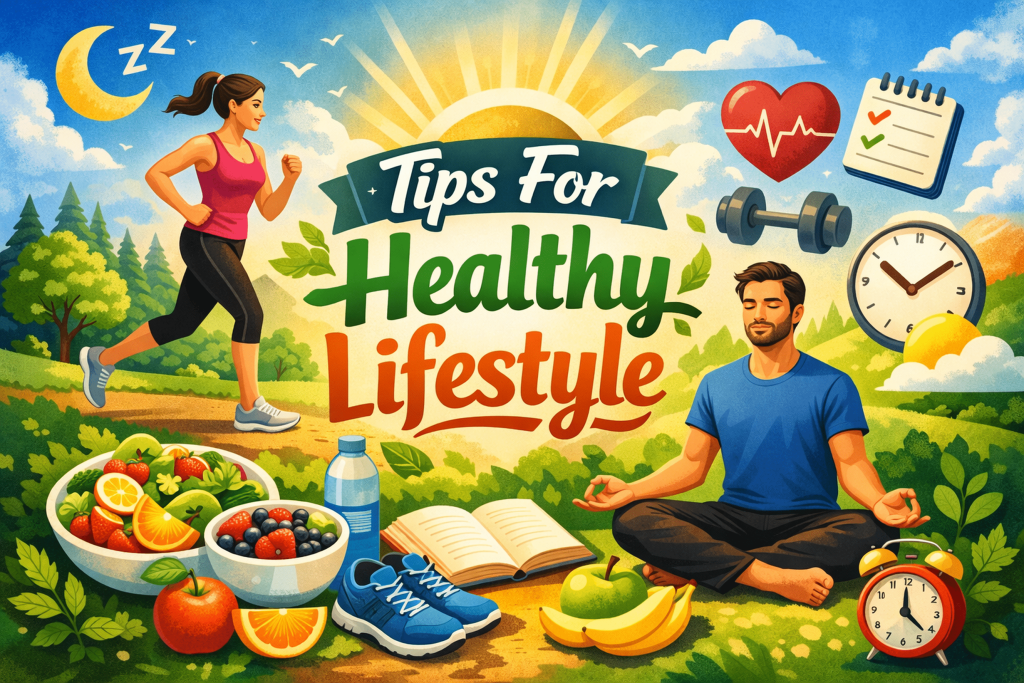
Here are five simple habits that make a real difference — even if you’re not perfect.
Quick Summary
- Walk daily (even 10–15 minutes)
- Eat enough protein
- Improve your sleep first
- Eat slowly and mindfully
- Build one habit at a time
These simple health habits may look small, but they create powerful long-term results.
1. Walk Daily: The Most Underrated Science-Backed Health Habit

Walking doesn’t look impressive.
No transformation photos.
No intense workouts.
No hype.
But it works.
Research consistently shows that walking supports:
- Heart health
- Blood sugar control
- Better mood
- Reduced stress
- Improved sleep
- According to the World Health Organization, regular physical activity like walking can significantly reduce the risk of chronic diseases
And here’s the truth:
👉 You don’t need 10,000 steps.
Start small:
- 10 minutes after meals
- A short morning walk
- Walk while taking phone calls
I used to skip walking when I felt tired.
Ironically, it often made me feel more energetic.
Your body doesn’t need intensity.
It needs consistency.
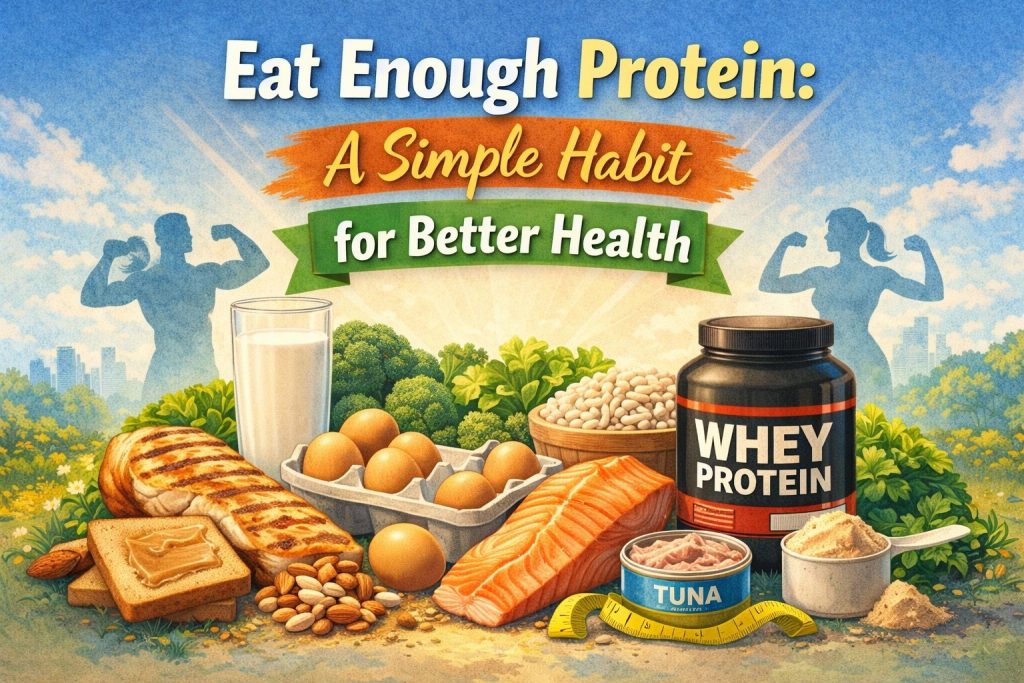
2. Eat Enough Protein: A Simple Habit for Better Health
Protein advice can get confusing.
Numbers. Powders. Diet plans.
Let’s simplify it.
Most people don’t eat enough protein — and it affects health more than we realize.
Protein helps you:
- Stay full longer
- Maintain muscle
- Control cravings
- Stabilize energy
You don’t need supplements.
Simple foods work:
- Eggs
- Dal
- Paneer
- Curd
- Chicken
- Fish
- Chana
- Tofu
I noticed something personally:
👉 Low protein = more cravings
👉 Enough protein = better control
Try this:
Add a protein source to every main meal.
That’s it. No tracking needed.
3. Improve Sleep First: The Foundation of Good Health
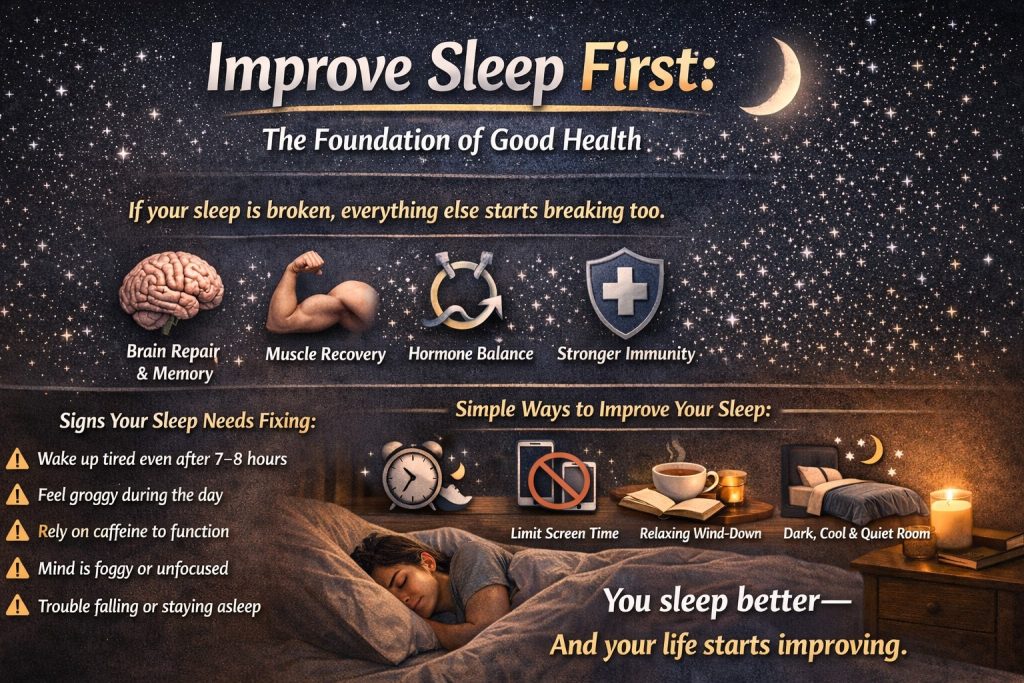
If your sleep is off, everything feels harder.
- You feel hungrier
- Your mood drops
- Focus disappears
- Motivation crashes
I learned this the hard way.
Trying to “fix” health while sleeping 5 hours never worked.
Science clearly shows:
👉 Sleep controls hormones linked to hunger, stress, and recovery.
You don’t need perfect sleep.
Just better sleep.
Start here:
- Sleep at the same time daily
- Reduce screen use before bed
- Keep lights dim at night
Ask yourself:
👉 “Can I sleep 15 minutes earlier tonight?”
That small change matters more than you think.
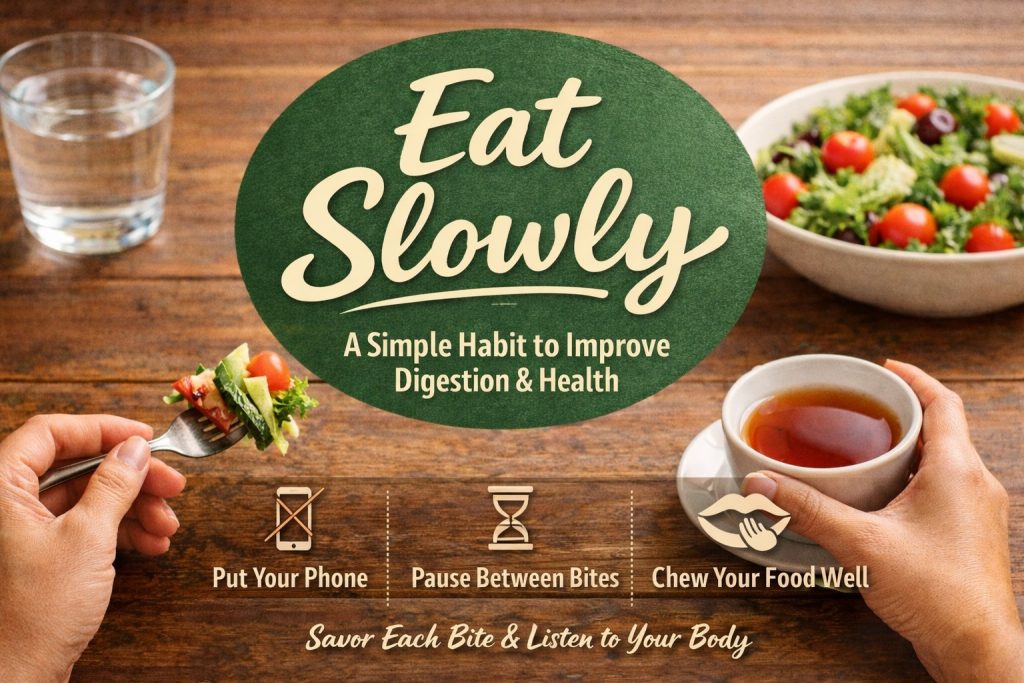
4. Eat Slowly: A Simple Habit to Improve Digestion & Health
This habit feels too simple.
But it works.
When you eat fast:
- You overeat
- You miss fullness signals
- Digestion suffers
When you slow down:
- You enjoy food more
- You eat less naturally
- You feel lighter
No complex method needed.
Just:
- Put your phone away
- Take small pauses
- Chew properly
I still rush sometimes.
But when I slow down, everything changes.
Eating slowly is not about control.
It’s about awareness.
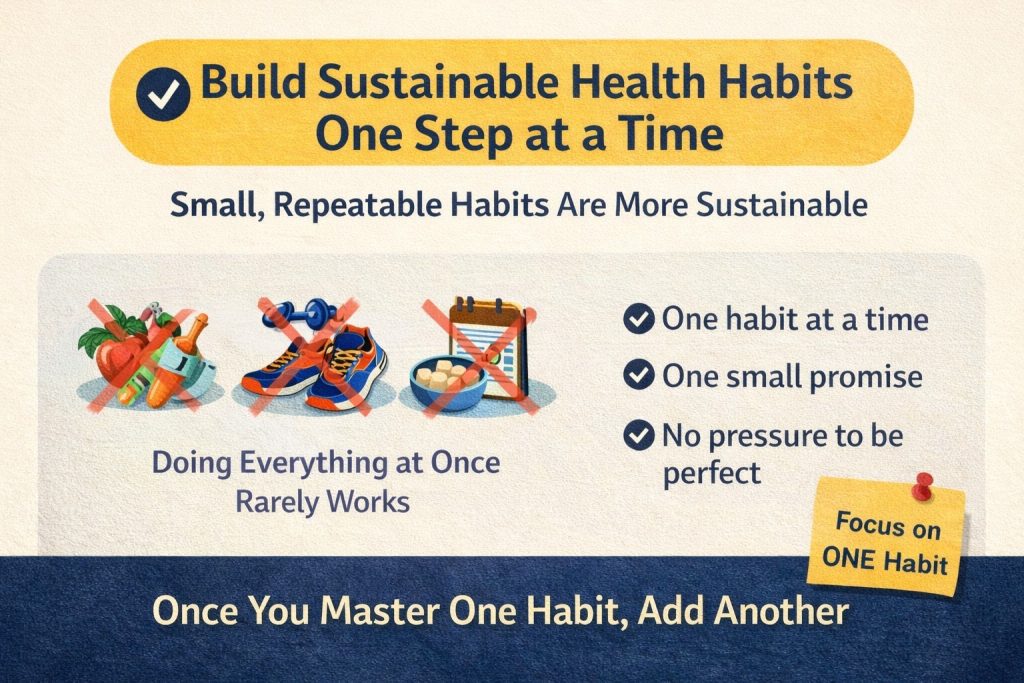
5. Build Sustainable Health Habits One Step at a Time
This is the most important habit.
Trying to change everything at once rarely works.
New diet.
New workout.
New routine.
It feels exciting.
Then it collapses.
Science shows:
👉 Small, repeatable habits are more sustainable.
What worked for me:
- One habit at a time
- One small promise
- No pressure to be perfect
Examples:
- Walk daily for 2 weeks
- Add protein to breakfast
- Sleep 20 minutes earlier
Once it becomes normal, add the next habit.
Slow progress still works.
Messy progress still counts.
How These Health Habits Work Together
These habits are connected.
- Walking improves sleep
- Sleep improves food choices
- Protein supports energy
- Slow eating reduces overeating
This is how healthy lifestyle habits actually work.
Not extreme changes.
Just consistent actions.
My Honest Take After Years of Trying
I don’t follow these habits perfectly.
Some weeks are great.
Some weeks aren’t.
But these science-backed health habits always bring me back to balance.
They don’t require perfection.
They don’t punish mistakes.
They fit real life.
And that’s why they work.
Final Thoughts: Start Small, Stay Consistent
You don’t need to change everything today.
Just start with one.
One small habit.
One small step.
Because in the long run:
👉 Simple, consistent actions beat extreme effort.
If you’re looking for realistic health tips that actually last — this is where to begin.
Frequently Asked Questions
Do I need 10,000 steps daily to stay healthy?
No, you don’t need 10,000 steps daily. Even 10–15 minutes of walking can improve heart health, mood, and blood sugar levels. Consistency matters more than step count.
How much protein should I eat daily?
Instead of focusing on exact numbers, aim to include a protein source in every meal. Foods like eggs, dal, paneer, curd, chicken, and tofu can help meet your daily needs.
Why is sleep important for overall health?
Sleep helps regulate hormones, improve mood, support recovery, and control hunger. Poor sleep can lead to low energy, cravings, and reduced focus.
Does eating slowly help with weight management?
Yes, eating slowly helps you recognize fullness signals, prevents overeating, and improves digestion, which supports better weight control.
What is the best way to build healthy habits?
The best way is to start small and focus on one habit at a time. Simple, consistent actions are more effective than trying to change everything at once.

