



How to Stop Overthinking (Proven Methods to Calm Your Mind Fast)
Have you ever felt like your mind just won’t stop?
You replay conversations.
You imagine worst-case scenarios.
You overanalyze small things that don’t even matter anymore.
And somehow… you still can’t find a solution.
If that sounds familiar, you’re not alone.
Learning how to stop overthinking is something millions of people struggle with daily—and the truth is, it’s not about forcing your brain to stop.
It’s about understanding it.
Let’s break this down in a real, practical way.
What Is Overthinking? (And Why It Feels So Exhausting)
Overthinking is when your mind gets stuck in a loop of repetitive thoughts. According to American Psychological Association, repetitive thinking patterns are often linked to stress and anxiety.
It usually shows up as:
- Thinking about the past again and again
- Worrying about things that haven’t happened yet
- Analyzing every detail too much
- Struggling to switch off your thoughts
The problem is not thinking itself.
The problem is thinking without control.
That’s where learning how to stop overthinking becomes important.
Why Do People Overthink So Much?
Understanding the cause is the first step to solving it.
1. Your Brain Wants Control
Your mind believes:
“If I think enough, I’ll avoid mistakes.”
But this creates endless loops instead of clarity.
2. Anxiety Feeds Overthinking
When you feel anxious, your brain searches for problems.
And instead of finding one solution—it creates many scenarios.
3. Fear of Judgment
You replay situations like:
- “Did I say something wrong?”
- “What do they think about me?”
This leads to constant mental replay.
4. Unresolved Emotions
Old memories, regrets, and unfinished conversations keep coming back.
Your brain is trying to “fix” something that’s already over.
5. Too Much Free Time
Overthinking grows when your mind has nothing else to focus on.
Idle time = active thoughts.
Signs You Need to Stop Overthinking
You may need to learn how to stop overthinking if:
- You can’t sleep because of thoughts
- You replay conversations repeatedly
- Small problems feel big in your mind
- You feel mentally tired all the time
- You imagine worst-case scenarios often
Recognizing this is the first step.
How to Stop Overthinking (10 Proven Techniques)
Now let’s get into practical solutions that actually work.
1. Build Awareness of Your Thoughts

Start noticing when overthinking begins.
Ask yourself:
- What triggered this thought?
- Is this helpful or repetitive?
Awareness reduces intensity.
2. Separate Yourself From Your Thoughts

Instead of saying:
“I am a failure”
Say:
“I’m having the thought that I am a failure”
This creates distance and control.
3. Schedule a “Worry Time”
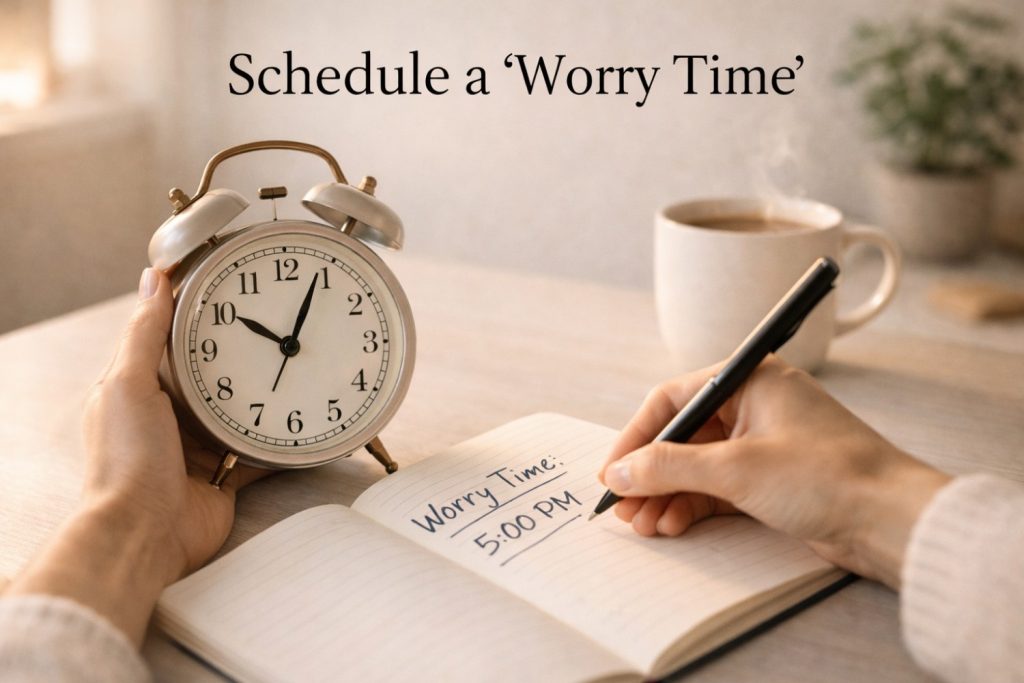
Set 15 minutes daily to think freely.
When thoughts come outside that time—delay them.
This trains your brain to stop constant thinking.
4. Move Your Body Daily

Physical activity reduces overthinking instantly.
Try:
- Walking
- Exercise
- Stretching
Movement calms your mind.
5. Take Action Instead of Thinking

Overthinking grows in inaction.
So take small steps:
- Send the message
- Start the task
- Make a decision
Action breaks mental loops.
6. Challenge Negative Thoughts

Ask yourself:
- Is this really true?
- Am I exaggerating?
Most thoughts are not facts.
7. Use Grounding Techniques

Try the 5-4-3-2-1 method:
- 5 things you see
- 4 things you feel
- 3 things you hear
- 2 things you smell
- 1 thing you taste
This brings you back to the present.
8. Write Your Thoughts Down
Journaling helps release mental pressure.
When thoughts are written, they stop repeating.
9. Reduce Overthinking Triggers

Limit:
- Social media
- Caffeine
- Screen time
Improve:
- Sleep
- Routine
- Focus
10. Improve Your Sleep Quality

Poor sleep increases overthinking.
Fix your sleep:
- Same bedtime daily
- No phone before sleep
- Calm environment
What NOT to Do When Trying to Stop Overthinking
Avoid these mistakes:
- Trying to force your thoughts to stop
- Ignoring your emotions
- Expecting quick results
Overthinking reduces gradually—not instantly.
When Overthinking Becomes Serious
Sometimes, overthinking is linked to:
- Anxiety disorders
- OCD
- Chronic stress
If thoughts feel uncontrollable or overwhelming, consider professional help.
Healthy Thinking vs Overthinking

Not all thinking is bad.
Healthy thinking:
- Helps you solve problems
- Improves focus
Overthinking:
- Creates stress
- Repeats endlessly
The goal is balance—not silence.
Simple Daily Routine to Stop Overthinking
Morning
- Deep breathing
- Set one intention
Afternoon
- Stay active
- Limit distractions
Evening
- Journal your thoughts
- Avoid screens
Consistency is key.
Final Thoughts on How to Stop Overthinking
Learning how to stop overthinking is not about eliminating thoughts.
It’s about:
- Understanding your mind
- Creating awareness
- Taking control slowly
Be patient with yourself.
Your brain learned this habit over time.
It will take time to unlearn it.
But with small daily actions—you will see change.
Frequently Asked Questions (FAQs)
1. Why do I overthink so much?
Overthinking is often caused by anxiety, fear of judgment, and a strong desire to control outcomes. Your brain tries to solve problems by thinking repeatedly, but it creates mental loops instead of solutions.
2. How can I stop overthinking quickly?
You can reduce overthinking by taking small actions, using grounding techniques like the 5-4-3-2-1 method, and focusing on the present moment instead of future worries.
3. Is overthinking a mental disorder?
Overthinking itself is not a disorder, but it is often linked to anxiety, OCD, and chronic stress. If it feels uncontrollable, professional help may be useful.
4. Does overthinking affect sleep?
Yes, overthinking keeps your mind active at night, making it difficult to relax and fall asleep, which leads to poor sleep quality.
5. Can exercise help reduce overthinking?
Yes, physical activity helps reduce stress hormones and improves mental clarity, which can significantly reduce overthinking.


